Designing a Connected Patient Care Journey

created for

Healthcare systems are complex ecosystems where patients navigate multiple touchpoints across providers, services, digital platforms, and communication channels. I worked with NewYork-Presbyterian to explore how service design could better support patients by creating more connected, personalized care journeys. Through patient research, stakeholder collaboration, and experience strategy, I helped define a scalable personalization approach that balanced patient needs, organizational complexity, and healthcare privacy requirements.

My Role: UX Researcher + Service Designer + Experience Strategist
Timeframe: 2 months
SERVICE DESIGN
HEALTHCARE
PATIENT EXPERIENCE
PERSONALIZATION STRATEGY
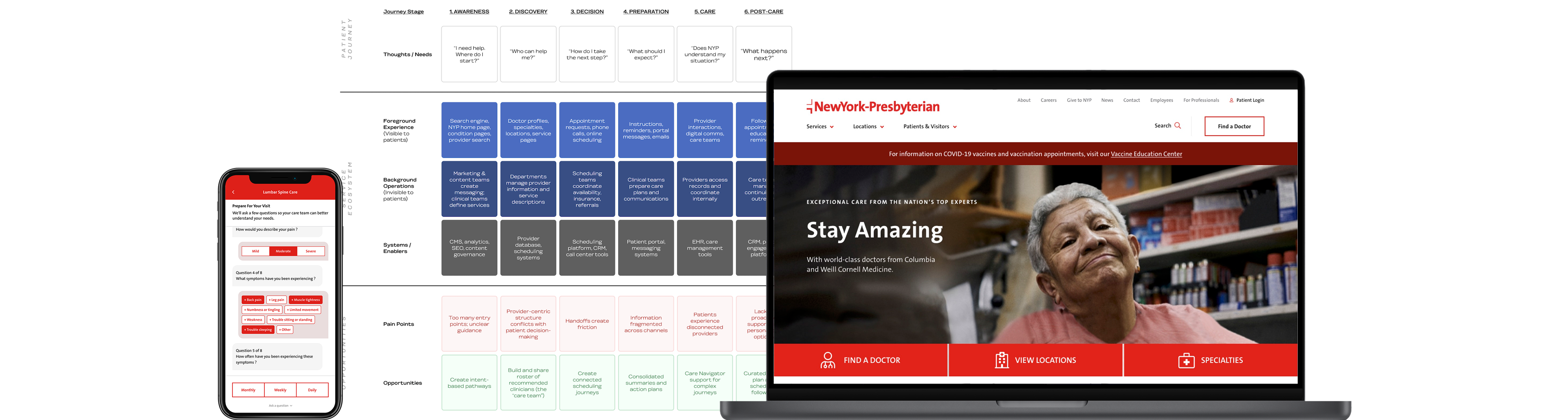
Cropped image of service blueprint with mobile interface overlapping.
THE CHALLENGE
Designing a patient-centered experience across a complex healthcare ecosystem
NewYork-Presbyterian’s healthcare ecosystem spans 10 hospitals, 200+ care locations, and a growing network of digital health services. As this ecosystem expanded, patients increasingly navigated care across disconnected providers, platforms, and communication channels, creating gaps in continuity, context, and guidance throughout their journey.
UNDERSTANDING PATIENT JOURNEYS
Researching patient needs, behaviors, and healthcare experiences.
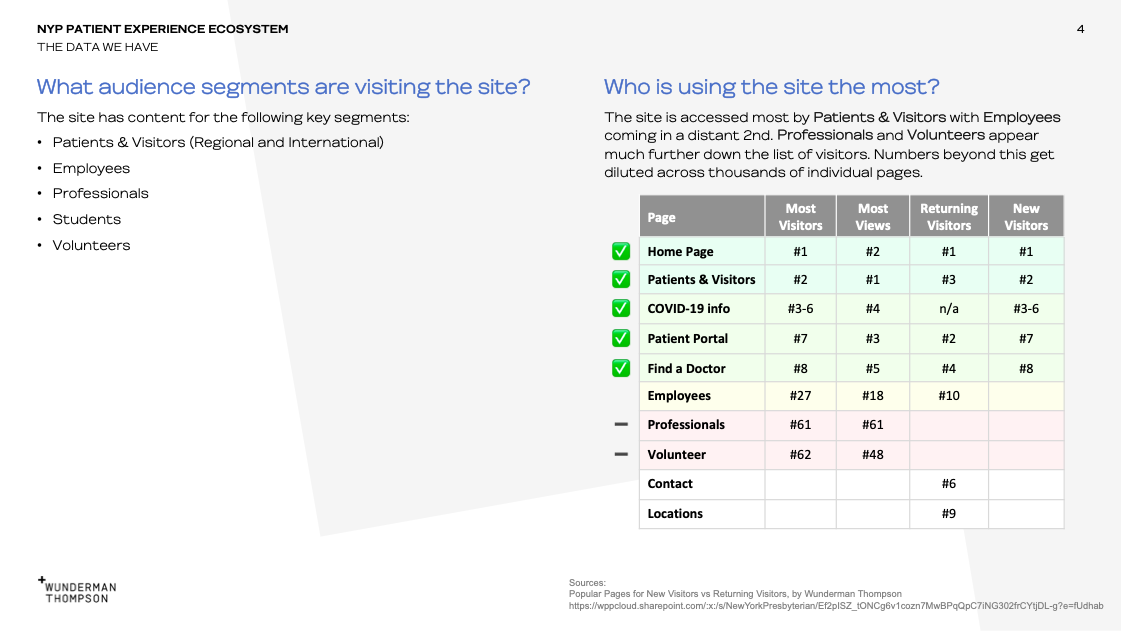
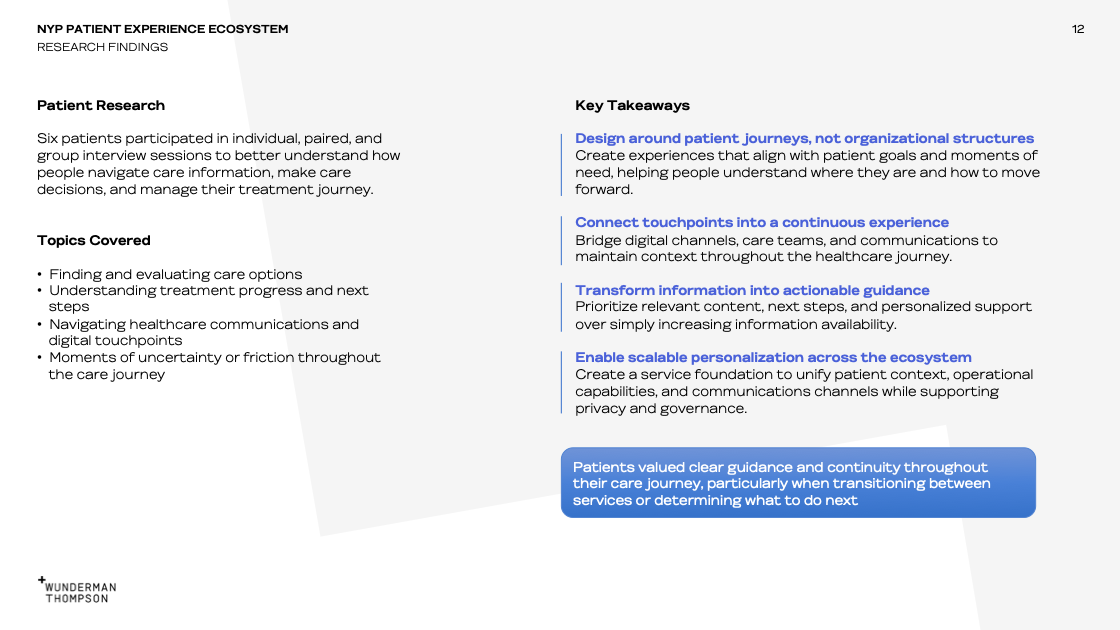
I conducted patient interviews and analyzed digital experience data to understand how people searched for information, made decisions, and interacted with healthcare resources. Research revealed patterns across patient needs, motivations, concerns, and moments of uncertainty. These insights informed the development of patient profiles that represented different healthcare journeys and opportunities for improved support.
Slide of engagement data for pages. User research summary of interviews.

MAPPING THE EXPERIENCE ECOSYSTEM
Connecting patient needs with organizational capabilities and digital touchpoints.
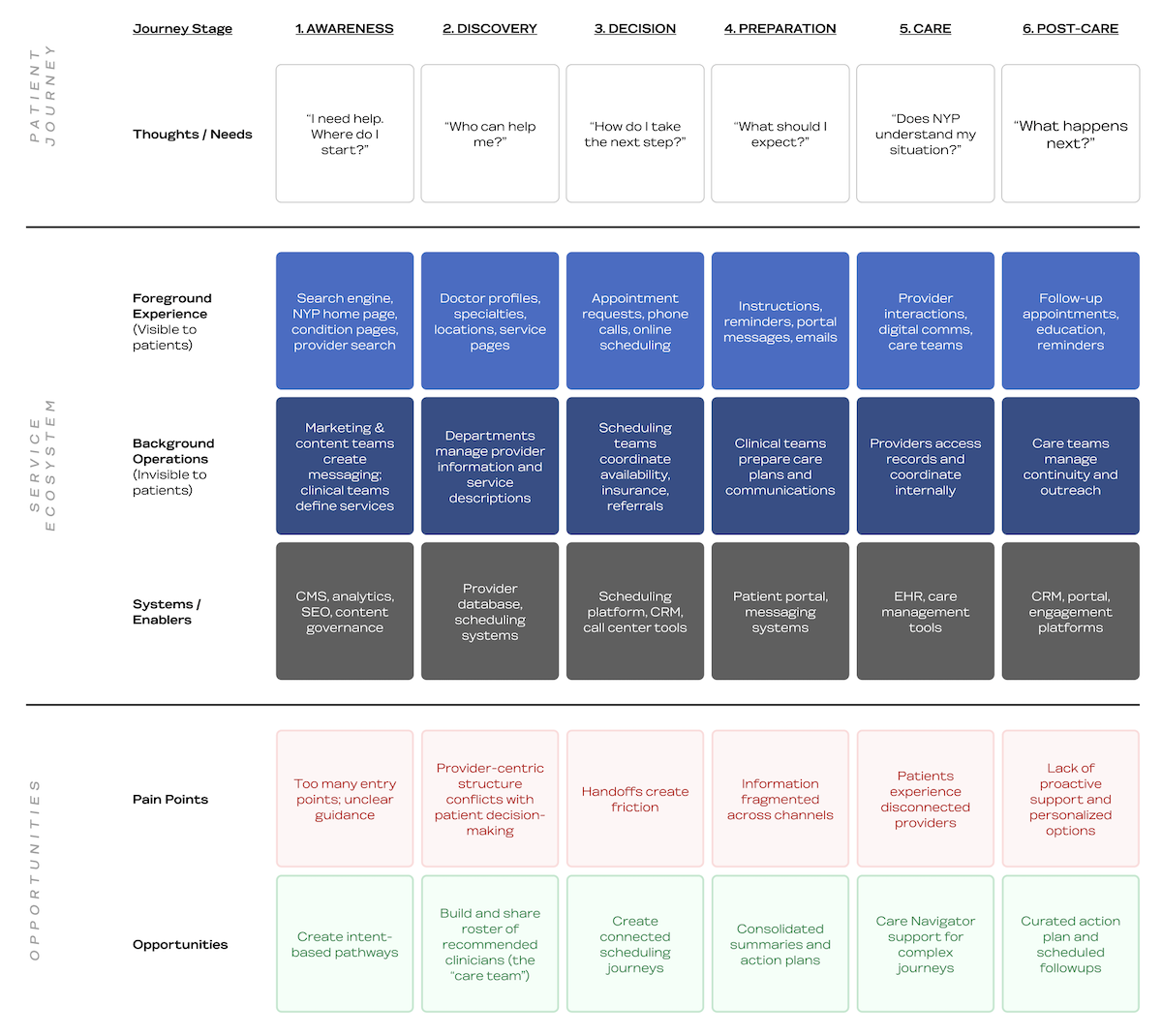
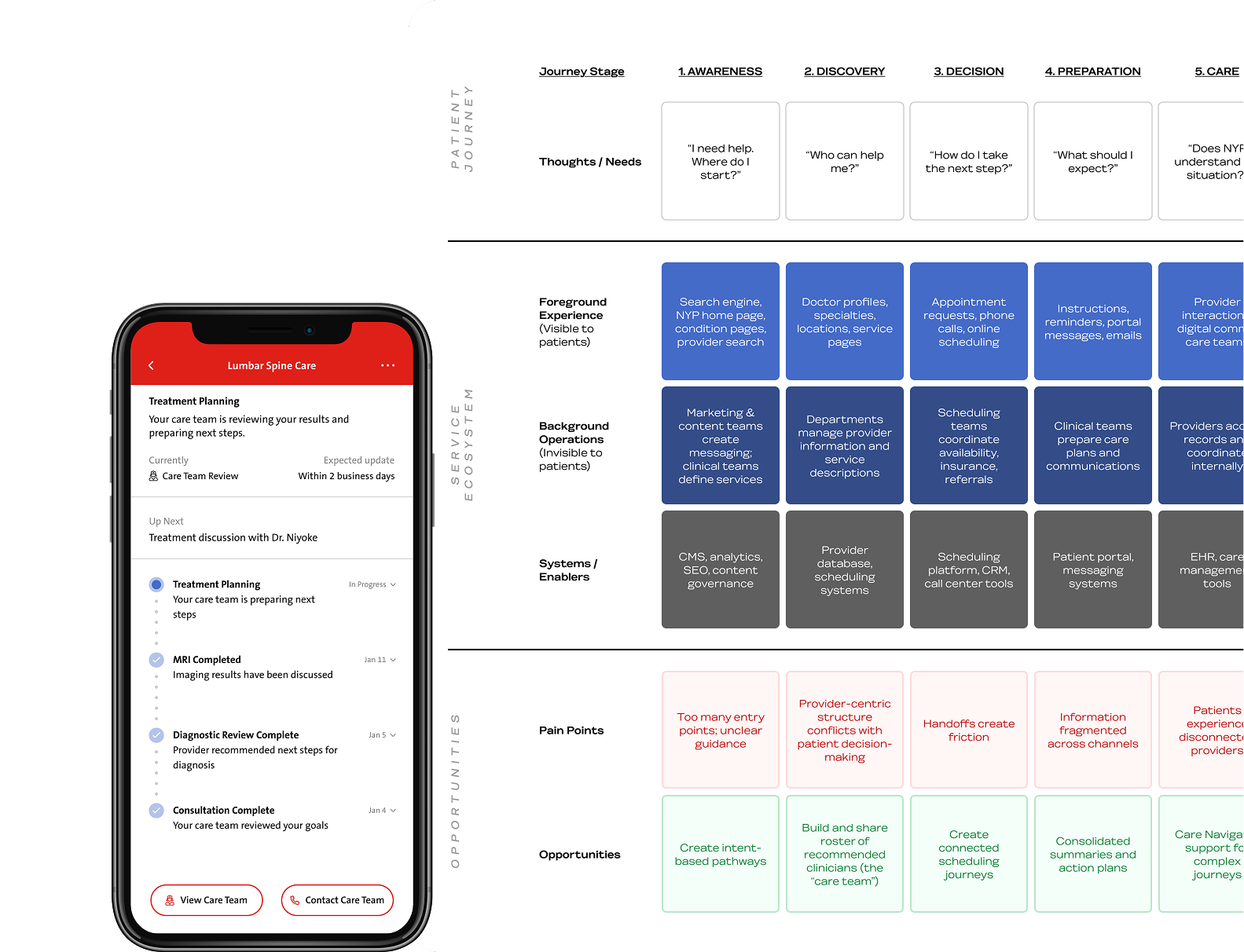
Healthcare experiences extend beyond individual interactions. Patients move across multiple systems, channels, and services when seeking care. I mapped relationships between patient goals, care needs, digital touchpoints, and organizational capabilities to identify opportunities for a more connected experience model. These insights helped define how personalization could support patients throughout different stages of their healthcare journey.
IMAGE: A service design bluprint maps patient profiles to healthcare journeys, information needs, digital touchpoints, and personalization opportunities.
THE CARE EXPERIENCE STRATEGY
Creating a scalable framework for more relevant healthcare experiences.
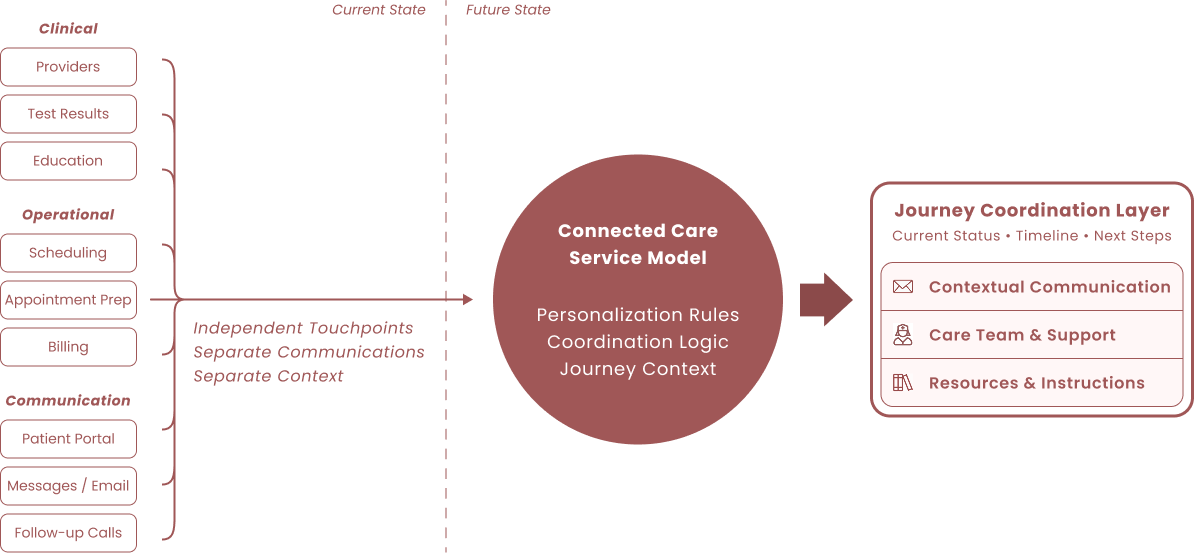
I developed a personalization strategy that balanced three critical factors: Patient needs and expectations, Organizational content capabilities, Healthcare privacy and governance requirements. Rather than creating isolated personalized experiences, the strategy established a scalable approach for delivering more meaningful content and experiences across healthcare journeys. The strategy reorganized healthcare interactions around ownership of the next step, reducing uncertainty by making responsibilities, progress, and care transitions visible throughout the patient journey.
A diagram shows how the service journey was designed.
PATIENT SUPPORT EXPERIENCE
Bringing the service strategy to life through a connected patient experience.
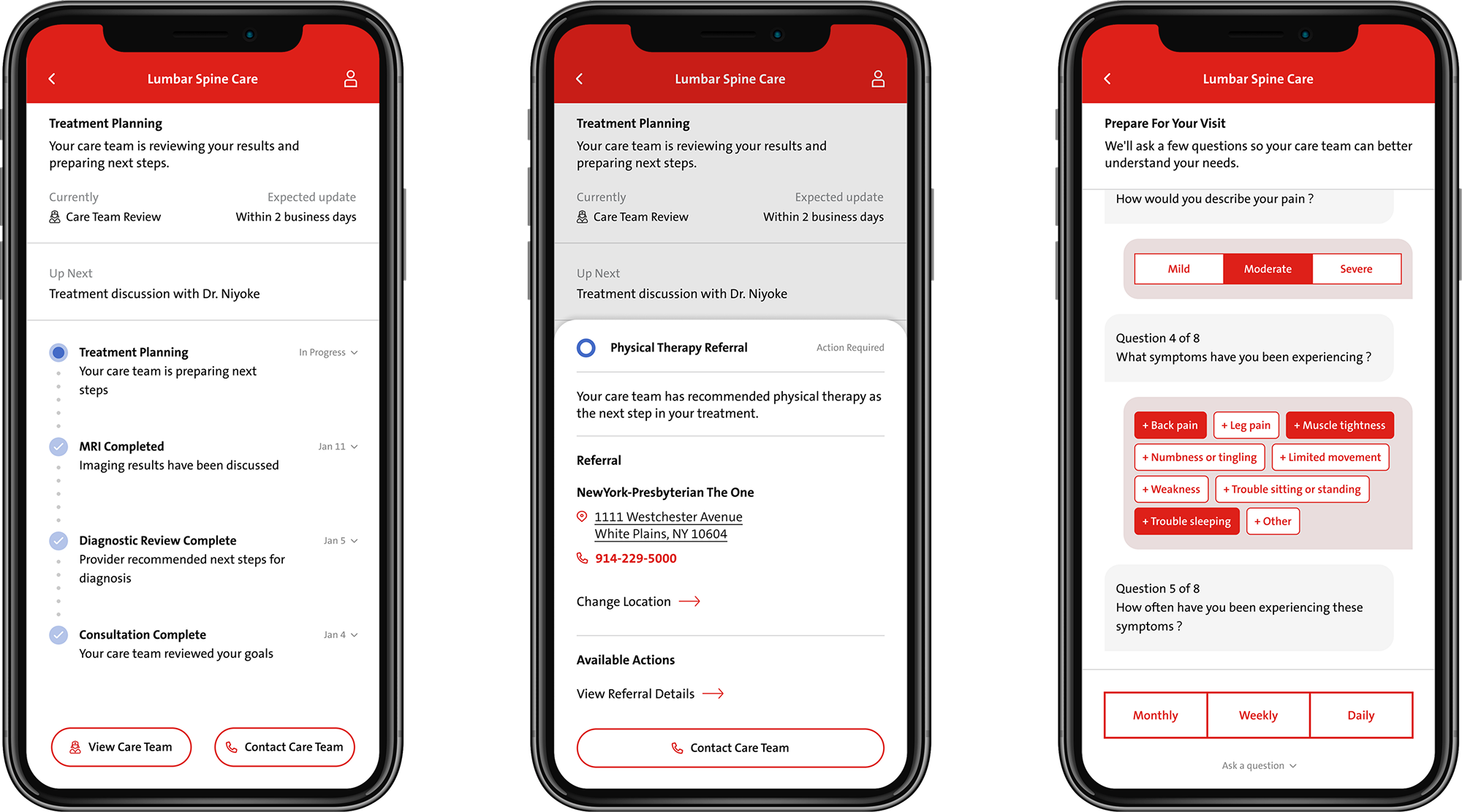
The service strategy became a digital experience layer that connected fragmented healthcare touchpoints around the patient's journey. The experience provided visibility into progress, next steps, and relevant support while connecting communications, resources, and care interactions through a shared context.
A series of interfaces how the digital part of the experience on mobile devices.
IMPACT
Establishing a foundation for connected, patient-centered care journeys.
The project established a service framework for NewYork-Presbyterian’s digital ecosystem that organized healthcare interactions around patient needs rather than organizational structures. By connecting patient context, operational workflows, and digital touchpoints, the work established a scalable model for delivering clearer guidance, more relevant communication, and greater continuity across the care journey.
An image collage shows a dashboard of Patient Profiles and pages with personalized content pathways.
END OF CASE STUDY PREVIEW
Access full case studies with additional research, design artifacts, and documentation.